
Michigan FAQ
Michigan's landscape features some of the most remarkable natural attractions in the United States, shaped by ancient glaciers and the powerful forces of the Great Lakes. These three destinations showcase towering sand dunes, colorful sandstone cliffs, and impressive waterfalls that draw visitors year-round.
Sleeping Bear Dunes National Lakeshore
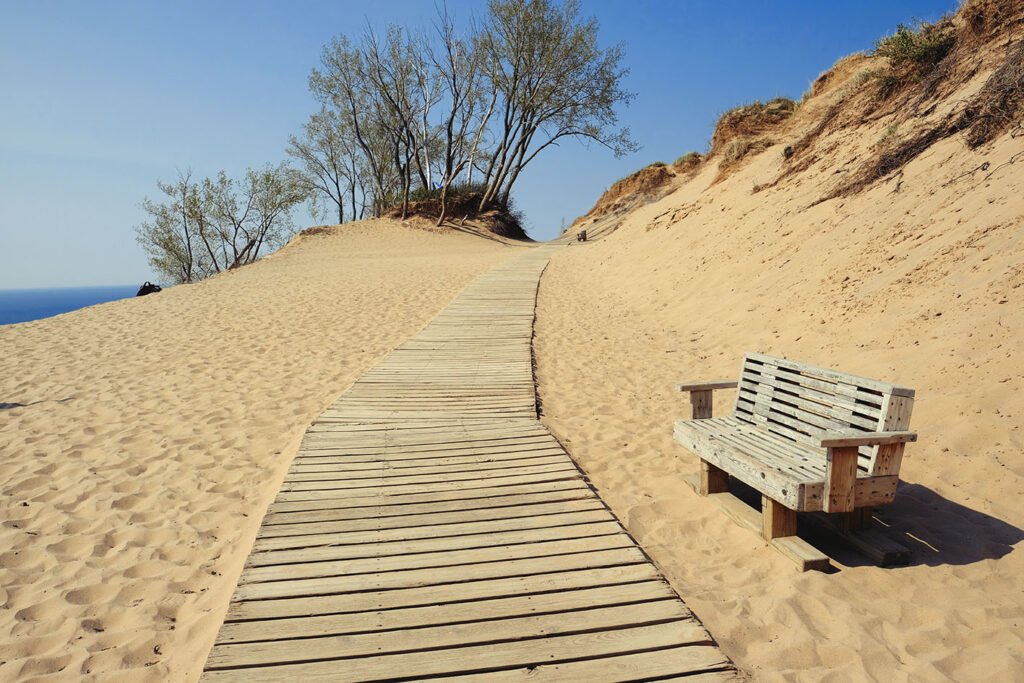
You'll find massive sand dunes reaching up to 450 feet above Lake Michigan at Sleeping Bear Dunes National Lakeshore. The park stretches along 35 miles of Lake Michigan shoreline and includes two islands.
The Pierce Stocking Scenic Drive offers a 7.4-mile loop with overlooks where you can see the Manitou Islands and vast stretches of blue water. You can stop at multiple viewing areas without hiking.
The main dune climb challenges you with a steep ascent, but the view from the top makes the effort worthwhile. The park contains forests, beaches, and historic structures alongside the famous dunes. You can hike, swim, kayak, or simply walk the beaches.
Twelvemile Beach provides a quieter alternative to the busier southern beaches. The area stays open year-round, though some facilities close in winter.
Pictured Rocks National Lakeshore
Pictured Rocks National Lakeshore features sandstone cliffs that rise 50 to 200 feet above Lake Superior. The cliffs display streaks of red, orange, yellow, blue, green, brown, and black created by mineral deposits seeping through the rock over thousands of years.
You can view the 15-mile stretch of colorful cliffs by boat tour, kayak, or from hiking trails above. The water approach gives you the best perspective of the rock formations.
Miners Castle stands as the only cliff formation you can drive to directly. The structure lost one of its two turrets in 2006 but remains an impressive sight. Chapel Rock features a lone white pine tree that has survived on the isolated rock formation for approximately 250 years.
The park includes waterfalls, beaches, forests, and sand dunes alongside the famous cliffs. Twelvemile Beach within the park offers a long, sandy shoreline perfect for walking and beachcombing.
Tahquamenon Falls State Park
Tahquamenon Falls State Park protects one of the largest waterfalls east of the Mississippi River. The Upper Falls drops nearly 50 feet and stretches more than 200 feet across. You'll notice the water appears brown due to tannins from cedar swamps upstream.
The Lower Falls consists of five smaller cascades surrounding an island you can reach by rowboat rental. These falls offer a gentler experience than the powerful Upper Falls.
A four-mile stretch of the Tahquamenon River connects the two falls areas. You can hike the river trail or drive between the two sites. The park maintains paved pathways to both viewing areas, making them accessible to most visitors. Winter transforms the falls into dramatic ice formations that remain partially flowing even in freezing temperatures.