
About Michigan
An Overview of Michigan
Michigan, situated in the Midwest region of the United States, is bordered by four of the Great Lakes: Lake Superior, Lake Michigan, Lake Huron, and Lake Erie.
This strategic location not only bestows upon Michigan the longest coastline of any state in the U.S. — spanning over 3,200 miles — but also makes it a unique destination for both residents and visitors seeking natural beauty and outdoor adventures. The state’s dual peninsulas, the Upper and Lower, are separated by the Straits of Mackinac, enhancing its geographical richness and diversity.
One notable aspect of Michigan’s significance arises from its historical and cultural position within the nation. Established as a state in 1837, Michigan has a rich heritage linked to indigenous tribes, French settlers, and later, a substantial influx of immigrants that shaped its cultural landscape. Detroit, the largest city in the state, is known as the "Motor City" due to the role it played in the development of the American automobile industry. This industrial legacy continues to influence the state's economy and culture.
Additionally, Michigan is renowned for its diverse recreational opportunities, which range from hiking in the numerous state parks to enjoying the vibrant fall colors in the forests. The state offers a wealth of activities for outdoor enthusiasts, including fishing, boating, and skiing, attracting millions of visitors annually. Each season provides a unique perspective on the landscape, making Michigan a year-round destination.
Map of Michigan
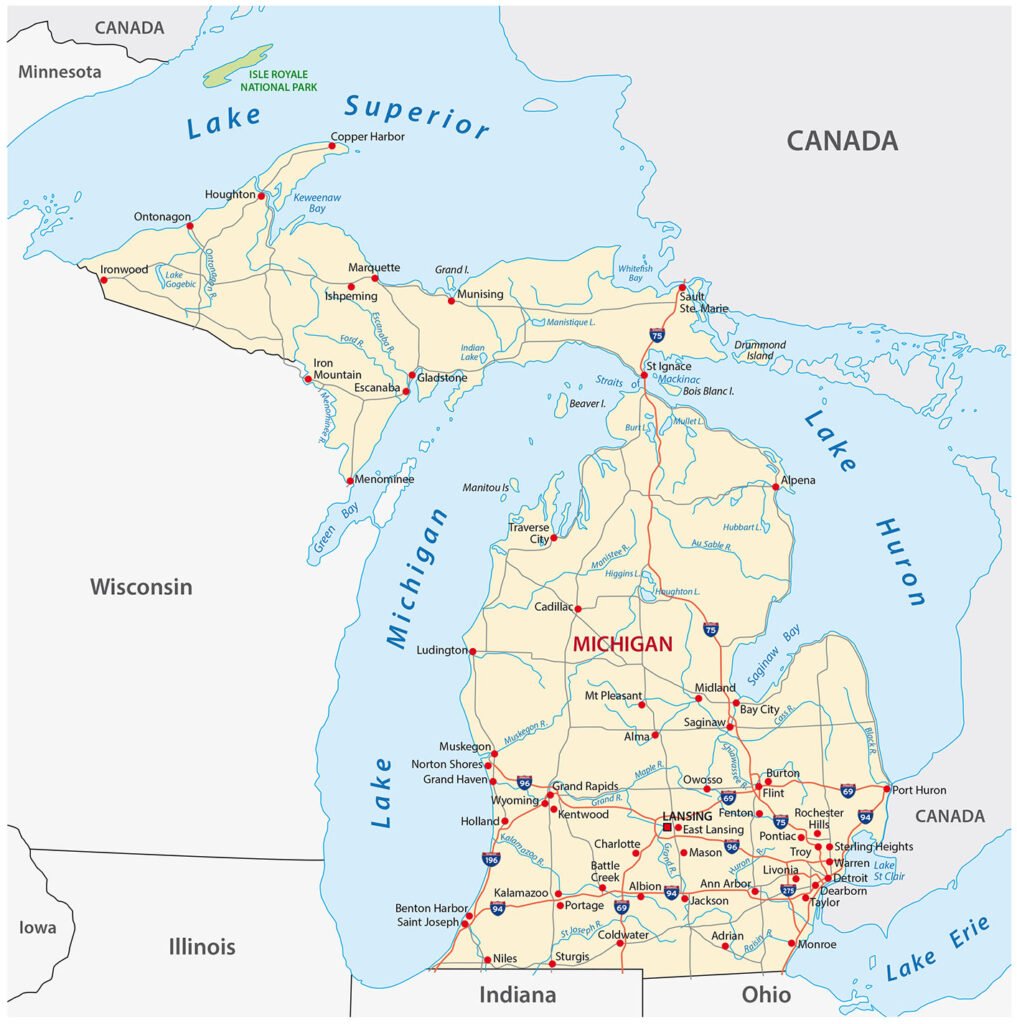
The Great Lake State
A Brief History of Michigan
Michigan has a rich and diverse history that dates back thousands of years, beginning with the indigenous peoples who inhabited the region long before European contact. The Anishinaabe tribes, including the Ojibwe, Odawa, and Potawatomi, are among the earliest known inhabitants. They utilized the region's abundant natural resources, engaging in hunting, fishing, and agriculture, which established their sustainable way of life.
The arrival of European explorers in the early 17th century marked a significant turning point in Michigan's history. French Jesuit missionaries, followed by fur traders, began to explore the area, leading to French colonization. In 1701, Antoine Laumet de La Mothe, sieur de Cadillac, founded Detroit, which became a vital trading post. Over the years, Michigan fell under British control after the French and Indian War, significantly impacting economic and cultural developments.
The late 18th century saw Michigan transitioning into a territory of the United States, particularly following the American Revolutionary War. The formation of the Northwest Ordinance in 1787 laid the groundwork for Michigan's future statehood. Following the War of 1812, when control shifted back to the United States, Michigan began to flourish economically. The discovery of minerals, notably copper and iron, alongside lumber, facilitated a mining boom that attracted settlers.
In 1837, Michigan officially became the 26th state of the United States, following a series of territorial conflicts and negotiations, including the infamous Toledo War. Throughout the 19th and early 20th centuries, the state experienced dramatic transformations with the rise of the automobile industry, thanks to figures like Henry Ford, solidifying its identity as a manufacturing hub. This industrialization set the stage for Michigan's major urban centers, such as Detroit, to thrive.
Michigan's Climate
Michigan's climate is classified as humid continental, which encompasses four distinct seasons: spring, summer, autumn, and winter. Each season presents a unique environment, influencing both the natural surroundings and the lifestyle of its residents. The state’s geographical location, bordered by the Great Lakes, significantly impacts its weather patterns, contributing to the delightful and varied climate experienced throughout the year.
During the spring months, temperatures begin to rise, averaging between 40°F (4°C) to 70°F (21°C) as the snow melts and nature awakens. This season witnesses a gradual increase in rainfall, which supports the lush greenery characteristic of the Michigan landscape. Summer, lasting from June to August, is generally warm with average highs around 80°F (27°C), although temperatures can occasionally climb into the 90s (30s°C). This period is vital for tourism, as residents and visitors take advantage of the numerous lakes for recreational activities.
As autumn approaches, the temperatures start to decrease once again, averaging between 50°F (10°C) to 70°F (21°C). The mild weather creates ideal conditions for the picturesque fall foliage found across the state, making Michigan an attractive destination for leaf-peepers. However, the transition into winter heralds significant changes, as temperatures plummet, averaging around 20°F (-6°C) to 30°F (-1°C) in many areas, especially in the Upper Peninsula.
Winter in Michigan is famously cold and snowy, with the state being a popular hub for winter sports. The Great Lakes play a crucial role in the severity of the winter season by providing moisture, resulting in lake-effect snow, especially along the western regions. This phenomenon not only enhances snowfall but also affects the local climate, creating an environment conducive to outdoor winter activities such as skiing, snowboarding, and ice fishing.
Demographics of Michigan
Michigan is a state known for its diverse population and rich cultural heritage. As of the latest census, Michigan has an estimated population of approximately 10 million residents, making it the 10th most populous state in the United States. This demographic composition reflects a unique amalgamation of various ethnicities and cultures, significantly shaping the state's identity.
The state boasts a diverse racial makeup, with substantial populations of White, African American, Hispanic, Asian, and Native American residents. According to the census data, non-Hispanic Whites account for around 75% of the population, followed by African Americans at approximately 14%. Hispanic and Latino residents comprise about 5%, while Asian Americans make up around 3%. This ethnic diversity not only enriches the cultural fabric of Michigan but also contributes to a vibrant community life, with numerous festivals and events celebrating the various heritages.
Age distribution within Michigan also presents an interesting narrative. The population is diverse in terms of age, with about 22% of residents under the age of 18 and approximately 16% aged 65 and older. The median age is around 39 years, revealing a relatively balanced demographic structure that supports a robust workforce while also catering to the needs of an aging population.
Urbanization in Michigan is another crucial aspect of its demographics. Major cities like Detroit, Grand Rapids, and Ann Arbor showcase significant urban populations, while rural areas, particularly in the Upper Peninsula and northern parts of the Lower Peninsula, exhibit lower population densities. This urban-rural divide influences lifestyle, economic opportunities, and access to services, reflecting the complexity of Michigan's demographic landscape.
Economy of Michigan
The economy of Michigan has undergone significant transformation over the years, marked particularly by its historical dependence on the automotive industry. As the birthplace of major automobile manufacturers such as Ford, General Motors, and Chrysler, Michigan has established itself as a global leader in automotive manufacturing. This sector not only drives Michigan's economy but also influences employment patterns, with a large portion of the state’s workforce engaged in automotive-related jobs.
In recent decades, the decline of the automobile industry prompted an urgent need for economic diversification. This necessity has led to growth in other sectors, such as agriculture, which plays a crucial role in the state's economy. Michigan is among the top producers of various crops, including cherries, blueberries, and potatoes. The agricultural sector benefits not only from the fertile land but also from a robust agribusiness infrastructure that supports processing and distribution.
Emphasis on technology and innovation has marked the recent economic landscape in Michigan. The state is home to numerous tech startups and research institutions, driving advancements in fields such as robotics, information technology, and life sciences. Companies like Duo Security and Edge Impulse illustrate the increasing importance of technology and its role in reshaping the job market, attracting a skilled workforce eager to participate in these burgeoning industries.
The recovery from economic downturns has seen an uptick in job creation across various sectors. Recent trends highlight a rebound in employment, showing signs of resilience and adaptability among Michigan's workforce and businesses. Additionally, the presence of key companies such as Steelcase and Whirlpool further supports the state's economic diversification and sustainability.
Education in Michigan
Michigan's educational landscape is diverse and multifaceted, comprising a network of primary, secondary, and higher education institutions. The state is home to an array of public and private schools that cater to a wide range of students. The Michigan Department of Education oversees K-12 education and is responsible for implementing educational standards and initiatives to enhance student achievement.
In terms of primary and secondary schools, Michigan has made strides in improving educational access and quality. Notably, the state has been recognized for its charter school movement, which offers alternative educational options to families. However, challenges persist, including achievement gaps and funding disparities among districts. The state's graduation rate, which stood at approximately 80% as of the latest reports, reflects both progress and the areas that require targeted reforms.
When considering higher education, Michigan boasts several prestigious institutions, including the University of Michigan, Michigan State University, and Wayne State University, among others. These universities offer a wide variety of undergraduate and graduate programs that attract students from across the nation and around the globe. Additionally, community colleges play a vital role in the higher education system, providing accessible education and vocational training tailored to the needs of local economies.
The state has implemented various educational initiatives aimed at enhancing literacy rates, improving STEM education, and increasing college readiness among its high school graduates. Despite these efforts, Michigan faces challenges such as fluctuating state funding and disparities in educational quality across regions, which complicate the overall educational effectiveness. Efforts to address these issues involve collaboration between educational institutions, local governments, and community organizations, aiming to foster a more equitable educational environment.
Tourism and Recreation Opportunities
Michigan offers a rich tapestry of tourism and recreational activities that cater to a diverse range of interests. The state’s geographical features, characterized by its vast lakes, lush forests, and rolling hills, provide an ideal backdrop for outdoor enthusiasts. The popular national parks, such as Isle Royale National Park and Pictured Rocks National Lakeshore, stand out as prime locations for hiking, camping, and enjoying natural beauty. Visitors can explore over 1,300 miles of trails, offering countless opportunities for both leisurely strolls and challenging hikes.
In addition to hiking, water sports abound in Michigan, with its 3,288 miles of shoreline making it a perfect destination for boating, fishing, and swimming. The Great Lakes, particularly Lake Michigan and Lake Huron, provide myriad recreational opportunities including jet skiing, kayaking, and paddle boarding. Each summer, coastline beaches attract thousands of visitors seeking sun and water activities, enhancing the state's reputation as a summer playground.
As winter arrives, Michigan transforms into a snowy wonderland, drawing skiing and snowboarding enthusiasts to its numerous ski resorts. Locations like Crystal Mountain and Boyne Mountain offer excellent terrain and well-maintained slopes, fostering a vibrant winter sports community. The state also features numerous snowmobile trails and ice fishing locations, appealing to outdoor lovers during the colder months.
Michigan is home to iconic tourist attractions that further enhance its appeal. Mackinac Island, famed for its historic sites and lack of motor vehicles, attracts visitors year-round, while the Michigan International Speedway draws motorsport fans from across the globe. Annual festivals, such as the Tulip Time Festival and the Mackinac Bridge Walk, epitomize the state's rich cultural offerings and provide unique experiences. The confluence of these recreational activities and cultural events makes Michigan a vibrant destination for tourists and residents alike.
Cultural Heritage and Festivals
Michigan boasts a rich and diverse cultural heritage that reflects the influences of various groups, including Native American, European, and African American communities. This mosaic of traditions has contributed to a vibrant artistic landscape characterized by music, visual arts, and culinary delights. The state is home to a multitude of art galleries, museums, and theaters that showcase both historical and contemporary works, providing a platform for local artists to express their creativity and engage with the public.
Music plays a significant role in Michigan's cultural scene, with Detroit being known as the birthplace of Motown and home to a plethora of musical genres, including jazz, rock, and hip-hop. Festivals such as the Detroit Jazz Festival proudly celebrate this musical heritage, drawing in both international and local artists and providing a space for musical expression and community gathering. The festival has become an annual tradition that not only honors the legacy of jazz but also fosters connections among diverse communities.
In addition to music, Michigan’s culinary scene reflects its cultural diversity. The state's deep-rooted agricultural heritage allows for a thriving farm-to-table movement, creating opportunities for local chefs to highlight seasonal ingredients. Iconic dishes, including the pasty and Detroit-style pizza, are celebrated throughout the state, contributing to its unique identity. The National Cherry Festival, held in Traverse City, showcases the region's cherry production and brings together families and friends to celebrate this delicious fruit through food, entertainment, and activities.
Michigan’s cultural festivals and rich traditions foster a sense of community while celebrating the state’s unique heritage. These events not only entertain but also educate attendees about the diverse influences that have shaped Michigan into the vibrant state it is today.